Conjugating the Irregular Spanish Verb Ir (to Go)
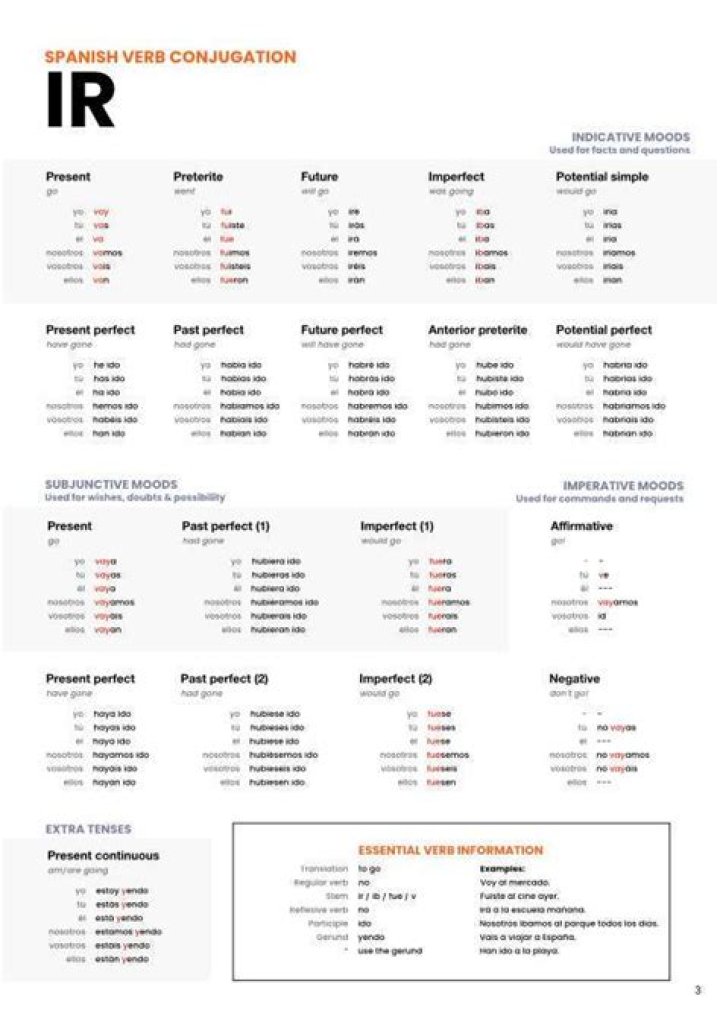
Spanish verbs fall into different groups, and each group is conjugated a little differently. If you’re going to master Spanish verbs like i r , you need to be able to identify which group a verb belongs to: regular (follows regular conjugation rules for -ar, -er, and -ir verbs), stem-changing (morphs depending on how you use it in a sentence), spelling-changing (has consonant-spelling changes in some forms to follow pronunciation rules), or reflexive (reflects the action back on the subject of the sentence).
But then there are those verbs that refuse to be lumped into a category: the irregulars. Other popular irregular Spanish verbs include: ser, tener, dormir and hacer Ir ( eer ) (to go) is the ultimate irregular – ir verb; that’s all it is, i and r ! It doesn’t follow most normal ending patterns, so your best bet is to just memorize its conjugations. Here it is in the present tense:
The Present Tense of Ir
| Conjugation | Translation |
|---|---|
| yo voy | I go |
| tú vas | You (informal) go |
| él/ella/ello/uno va | He/she/one goes |
| usted va | You (formal) go |
| nosotros vamos | We go |
| vosotros váis | You all (informal) go |
| ellos/ellas van | They go |
| ustedes van | You all (formal) go |
The following examples show you i r in action:
- Nosotros vamos al teatro a veces. (We go to the theater sometimes.)
- Mi madre va al supermercado ahora. (My mother is going to the supermarket now.)
The following table shows you ir in the preterit tense. Think you’ve seen these conjugations before? You probably have; it just so happens that they’re also the preterit forms of the verb ser (to be). It may be confusing, but look on the bright side: It’s one fewer set of verbs you have to memorize.
The Preterit Tense of Ir
| Conjugation | Translation |
|---|---|
| yo fui | I went |
| tú fuiste | You (informal) went |
| él/ella/ello/uno fue | He/she/one went |
| usted fue | You (formal) went |
| nosotros fuimos | We went |
| vosotros fuisteis | You all (informal) went |
| ellos/ellas fueron | They went |
| ustedes fueron | You all (formal) went |
You use the preterit tense like this:
- Los turistas fueron al museo. (The tourists went to the museum.)
- ¿Fueron ustedes al baile? (Did you go to the dance?)
Ir is one of only three irregular imperfect verbs. Here’s that conjugation; notice that, like regular verbs, the first-person and third-person singular forms (yo and usted) are the same.
The Imperfect Tense of Ir
| Conjugation | Translation |
|---|---|
| yo iba | I used to go |
| tú ibas | You (informal) used to go |
| él/ella/ello/uno iba | He/she/one used to go |
| usted iba | You (formal) used to go |
| nosotros íbamos | We used to go |
| vosotros ibais | You all (informal) used to go |
| ellos/ellas iban | They used to go |
| ustedes iban | You all (formal) used to go |
Here are some examples of the imperfect tense:
- Yo iba a Europa cada año. (I used to go to Europe every year.)
- Nosotros íbamos a Chicago. (We used to go to Chicago.)
Good news! Ir is regular in the future tense, so you can apply the regular verb endings here.
The Future Tense of Ir
| Conjugation | Translation |
|---|---|
| yo iré | I will go |
| tú irás | You (informal) will go |
| él/ella/ello/uno irá | He/she/one will go |
| usted irá | You (formal) will go |
| nosotros iremos | We will go |
| vosotros iréis | You all (informal) will go |
| ellos/ellas irán | They will go |
| ustedes irán | You all (formal) will go |
The following samples put the future tense to work:
- Nosotros Iremos a Orlando. (We will go to Orlando/)
- Yo iré a tu casa esta tarde. (I will go to your house this afternoon.)